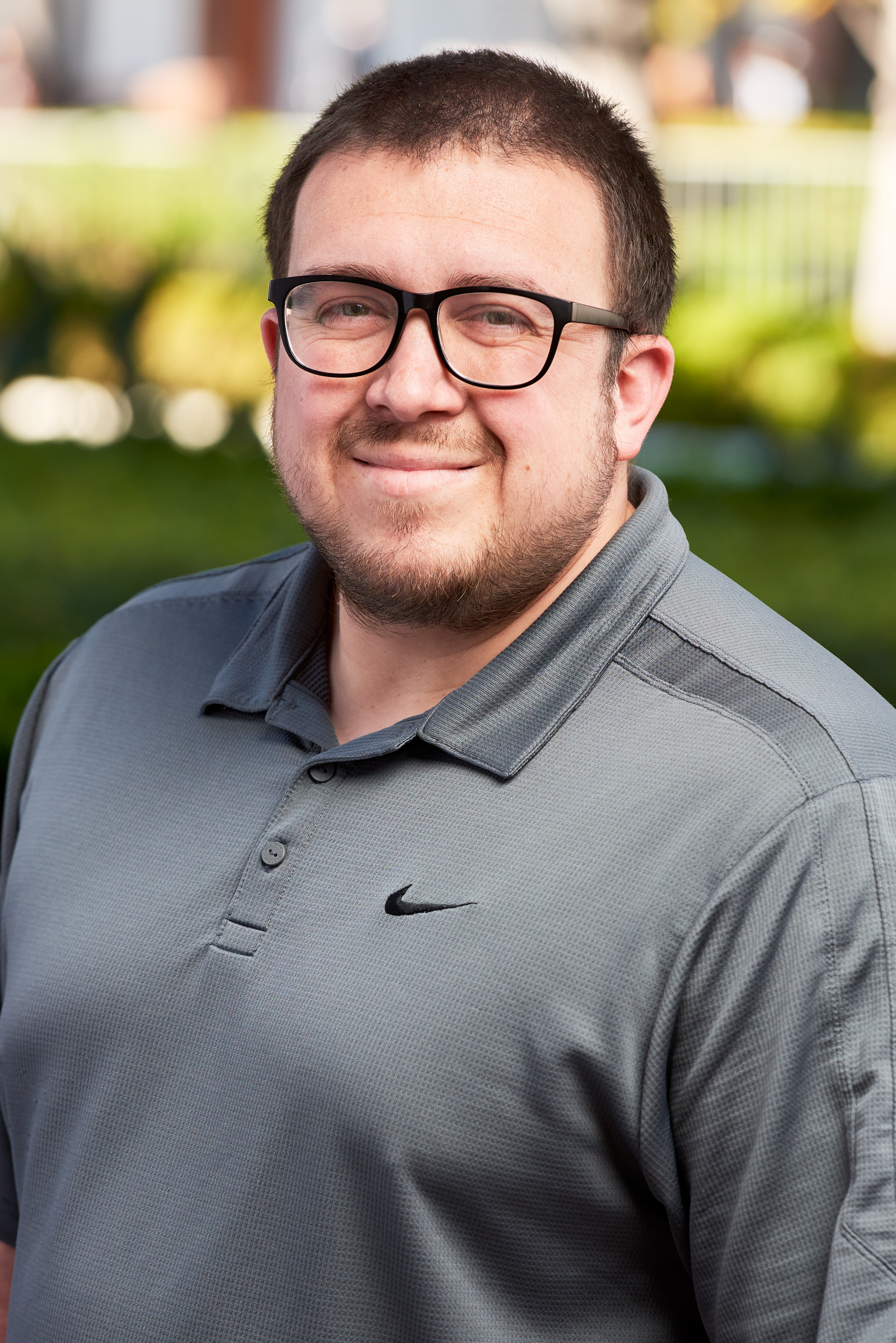
About
I've been drawn to the intersection of mathematics, markets, and computation since my undergraduate work in mathematics. What started as a fascination with the Kelly Criterion and optimal betting under uncertainty has evolved into a broader research program spanning volatility modeling, derivatives markets, credit, and AI-driven investment systems. My work sits at the boundary of quantitative finance and machine learning, with an emphasis on translating research into systems that can operate in real investment environments.
Research
My research focuses on applying modern statistical learning and artificial intelligence techniques to problems in asset pricing, volatility modeling, derivatives markets, portfolio construction, and market microstructure. I am particularly interested in how AI and ML methods can be translated from research environments into practical, implementable investment systems.
My doctoral research developed theoretical extensions of the Kelly Criterion under fat-tailed return dynamics, connecting stochastic control, heavy-tailed processes, and optimal growth strategies. Subsequent work has expanded into volatility forecasting, multivariate sequence modeling, nonlinear shrinkage for high-dimensional models, and the alpha term structure in corporate bond markets. My research has been supported by the Van Eck Digital Assets (VEDA) Initiative Research Grant.
Industry
In parallel with my academic research, I work closely with investment and financial-services companies to translate quantitative research into structured, production-ready workflows. My role often spans from high-level research leadership to hands-on technical execution: defining strategic objectives, shaping research roadmaps, building and coordinating small technical teams, establishing stakeholder alignment, and designing and implementing robust modeling and engineering pipelines that can be deployed in production. This work has included engagements with Capital Group, Guggenheim Investments, Guggenheim Securities, Critical Trading, and Group1001.
This work has included contributions to:
- Developing AI-based models for futures trading
- Designing research pipelines for credit and derivatives strategies
- Evaluating and stress-testing alpha signals across large corporate bond universes
- Prototyping systematic volatility and options trading models
- Conducting quantitative research for derivatives-enhanced investment products
I approach these engagements as both a researcher and a builder. In some cases, I work directly on model development, feature engineering, validation, and system design; in others, I operate at a more architectural and strategic capacity: defining objectives, structuring research programs, coordinating technical teams, and aligning quantitative design with business and investment goals. My focus is on ensuring that advanced AI/ML modeling techniques are not only technically rigorous, but also economically grounded and operationally viable.
Teaching
I teach undergraduate and graduate courses in deep learning, quantitative investing, data-driven consulting, statistical computing, and business analytics. My courses are built around real institutional problems, incorporating real datasets, realistic constraints, and applied research questions to ensure students experience challenges similar to those faced in professional quantitative roles.
I also serve as faculty advisor for QuantSC, sit on the MSBA Board of Advisors where I help guide the program's AI transformation, and have contributed to the design of Bovard's Online MS in Analytics and AI. I advise PhD, master's, and undergraduate students pursuing careers in quantitative research, asset management, trading, and AI-driven financial systems, with recent advisees placing at firms including Optiver, Bridgewater, Morgan Stanley, Bank of America, FlowTraders, and Sound Point Capital.
I have received the Marshall Teaching Excellence Award (2026), as one of four recipients across the school, along with the USC Marshall Golden Apple Award for Graduate Teaching and the Theodore Edward Harris Prize for Excellence in Teaching.